
Interior and Exterior Painting
Whole-property painting, including the weather-exposed outside surfaces that need their own preparation.
About Interior & Exterior Painting
The short answer
RS Spray Decor paints whole properties inside and out across Surrey and south-west London, from full interior colour schemes to render, masonry, weatherboard, fascias and period facades. Exterior surfaces are surveyed and prepared according to what they are made of, because render, timber and pebbledash each need a different approach. Free, no-obligation quotes.
Exterior work starts with a proper look at the substrate. Render, weatherboard, brick and pebbledash all need different preparation and different coatings, and getting that wrong is the reason cheap exterior jobs peel within two winters.
Failing coating is removed rather than covered, cracks and defective render are cut out and made good, and bare areas are stabilised before any topcoat goes near them.
Interior and exterior work is often run as one project, with the outside done while the weather allows and the inside picked up once access equipment is out of the way, rather than as two separate call-outs.
uPVC windows, doors and frames are a different substrate to render, timber and masonry, and are treated as their own dedicated service rather than folded into this one.
What it covers
- Render, pebbledash and masonry
- Timber weatherboard and cladding
- Fascias, soffits, bargeboards and gutters
- Exterior doors, frames and windows
- Whole-house interior schemes run as one project
What it suits
- Period facades where the existing coating and the substrate underneath both need identifying first
- Render and masonry with hairline cracking or previous patch repairs
- Timber that has weathered but is still sound
- Properties where inside and outside are being done as a single piece of work
Illustrative panel, not a photograph of a completed job. Project photography for this service is being collected.
Property-scale painting, and the outside of the building - where the substrate and the weather set the rules.
Before any finish goes on
- 01
The substrate gets identified before anything else. Render, timber, brick and pebbledash all need different preparation and different coatings, and treating them as one surface is why cheap exterior work fails early.
- 02
Loose and failing coating is removed rather than painted over. Anything left behind takes the new coat off with it later.
- 03
Cracks and defective render are cut out and made good, and bare areas are stabilised before any topcoat.
- 04
Timber is checked for rot at the joints and end grain first, since those are the places that fail.
- 05
Work is scheduled around the weather. Surfaces need to be dry and the temperature needs to be sensible, so the calendar bends around conditions.
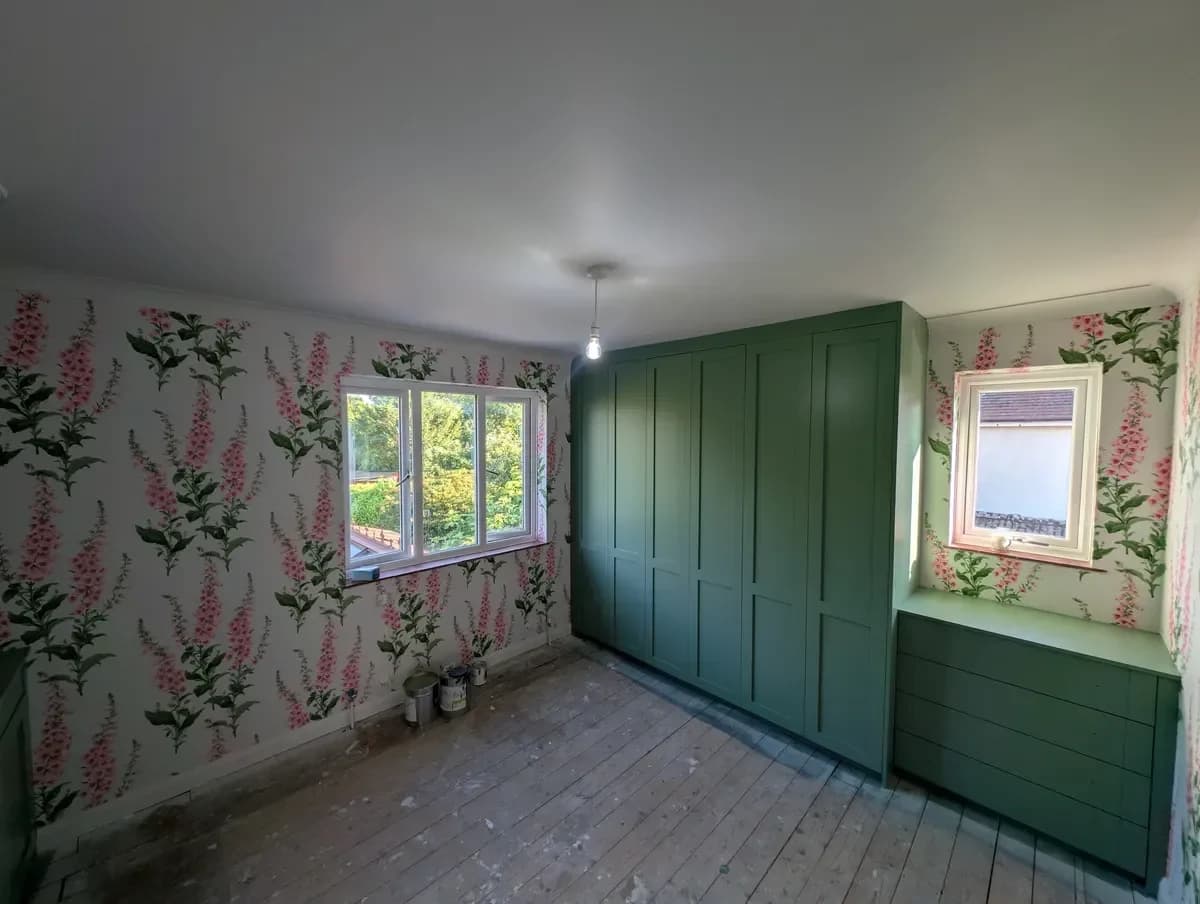
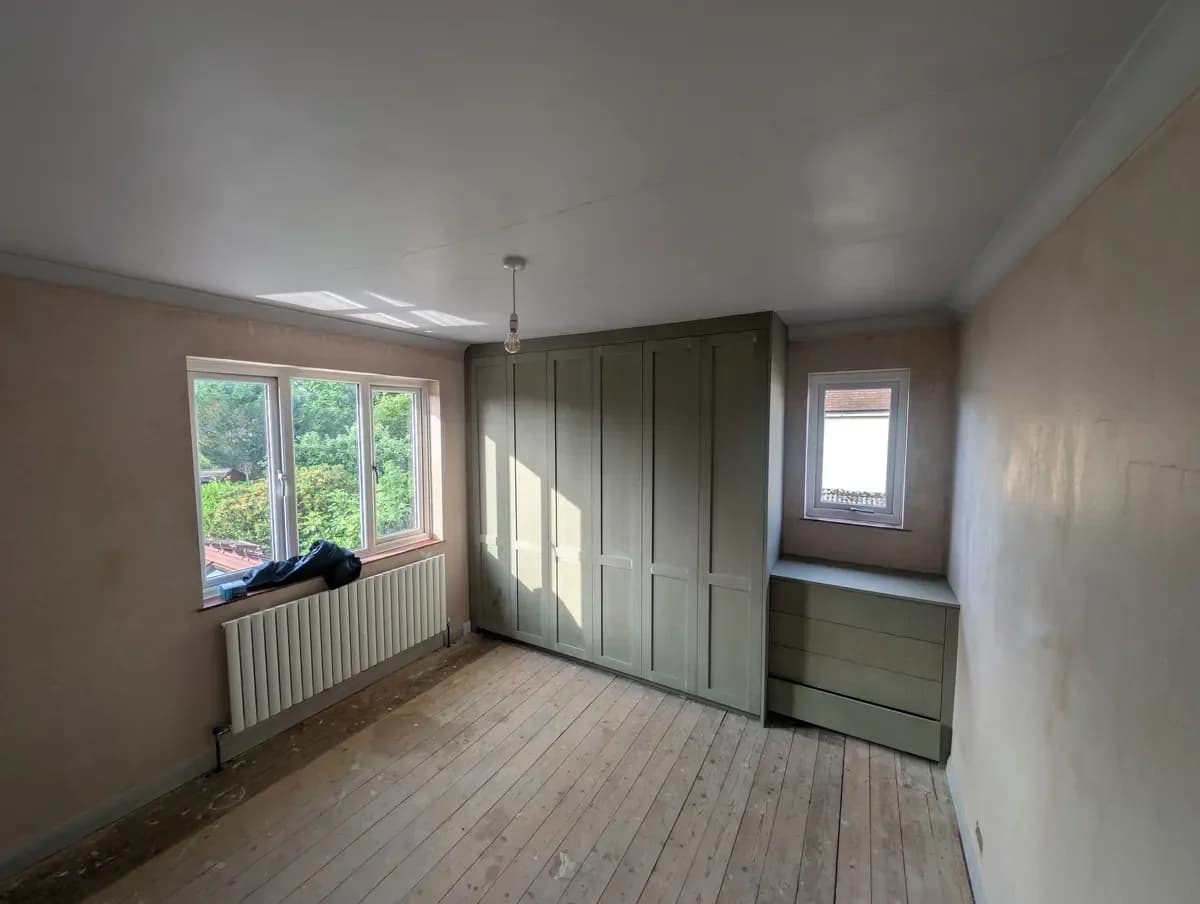
The same room, before and after
How a interior & exterior painting job runs
- 01
Survey the building
What each surface is made of, what is on it now, and what is failing. This is what the quote is built from.
- 02
Quote, access and timing
Including how access is handled and a realistic weather window, not a date that only works if it stays dry for a fortnight.
- 03
Repair and prepare
Failing coating removed, cracks and defective areas made good, bare and porous areas stabilised.
- 04
Coat the exterior
Built up in proper coats, surface by surface, working with the weather rather than against it.
- 05
Interior schemes
Where inside and outside are one project, interior work follows once access equipment is no longer in the way.
- 06
Walk the property
Round the outside together, everything cleared away, before the job is signed off.
What you get to choose
- Exterior systems matched to the substrate - masonry, timber and metal each get their own
- Interior schemes coordinated across rooms so the whole property reads as one decision
- Colour agreed on site, checked in daylight rather than off a screen
Where this is not the right job
- Exterior work depends on weather. Wet or cold spells move dates, and pushing through them shortens the life of the finish.
- Rot, failed pointing and damp need proper repair first. Paint is not a repair.
- Anything above safe ladder height needs proper access arranged, which is priced separately and honestly.
uPVC Spraying
Windows, doors and frames sprayed to change or refresh their colour, without replacing the uPVC underneath.
- Kitchen, Cabinet and Joinery ResprayingThe specialist service: spraying existing cabinetry and joinery so it looks renewed without being replaced.
- Professional DecoratingRoom-by-room interior work, where the preparation and the woodwork matter as much as the wall colour.
- uPVC SprayingThe uPVC-specific service: colour and finish rather than replacement, on a substrate that needs its own preparation and coatings.
- Commercial DecoratingWork in premises that have to keep functioning, where sequencing matters as much as the finish.
- WallpaperingPaper rather than paint - where the wall underneath and the pattern repeat decide the result.
Interior & Exterior Painting across Surrey and south-west London
Every town below has its own interior & exterior painting page with local detail.
- Guildford
- Weybridge
- Kingston upon Thames
- Staines-upon-Thames
- Twickenham
- Cobham
- Windsor
- Ashford
- Esher
- Walton-on-Thames
- Woking
- Leatherhead
- Epsom
- Sunbury-on-Thames
- Feltham
- Chertsey
- Virginia Water
- East Molesey
- Hersham
- Byfleet
Interior & Exterior Painting questions
Why does the substrate matter so much on exterior work?
Because render, brick, pebbledash, timber and metal all behave differently. Masonry needs a coating that lets moisture out, timber moves with the seasons and needs something flexible, and metal needs its own primer to stop rust bleeding through. Treating the whole building as one surface is the usual reason cheap exterior work fails within a couple of winters.
Will exterior paint survive UK winters?
It survives if the surface was sound, dry and properly prepared when it went on, and if the coating suits what it was applied to. Most exterior failures are not the paint giving up, they are moisture getting behind a coating that was applied over something loose, damp or unstable.
What happens if it rains partway through the job?
Work stops. Exterior coatings need a dry surface and a sensible temperature to form properly, and pushing on through a wet spell shortens the life of the finish. Dates move around the weather rather than the other way round, and that is built into how the job is planned.
When is the best time of year for exterior painting?
Late spring through early autumn, when surfaces get a chance to dry out and overnight temperatures stay reasonable. Work outside that window is possible in a settled dry spell, but the calendar has to stay flexible.
Do you repair render and timber before painting?
Yes, because paint is not a repair. Cracks and defective render are cut out and made good, loose and failing coating is removed rather than covered, and timber is checked for rot at the joints and end grain first, since those are the places that go before the face does.
Can pebbledash and textured render be painted?
Yes. Textured surfaces need more material and take longer than a flat wall, because the coating has to reach into the texture rather than bridge across it. That extra time and material is priced honestly rather than discovered halfway through.
Do you need scaffolding?
Anything above safe ladder height needs proper access arranged, whether that is a tower or scaffolding. It is priced separately and clearly, because it is a real cost and hiding it inside a headline figure helps nobody.
Can you paint fascias, soffits, bargeboards and gutters?
Yes, and they are worth doing while access is already up rather than as a separate visit later. Each gets the preparation and coating suited to what it is made of, which is not the same for timber as it is for uPVC or metal.
Will painting the outside stop damp inside?
No, and it can make it worse if the wrong coating traps moisture in the wall. Damp has a cause, usually a defect, a bridge or a failure somewhere in the fabric, and that needs identifying and fixing. Painting over it is money spent on hiding a symptom.
How do you match new paint into an existing scheme?
By matching against the existing paintwork or a sample rather than off a screen, and by checking the match on site in daylight. Colours read completely differently under a shop light, a phone screen and an overcast Surrey afternoon.
Can you paint a period facade?
Yes, though the first job is identifying what is already on it. Older properties often carry several generations of coating, and some of those need a breathable system over the top rather than a modern impermeable one that seals moisture into the wall.
Can you spray uPVC windows, doors and frames?
Yes, though it is treated as its own job rather than folded into exterior painting, because uPVC needs different preparation and coatings to render or timber. See the uPVC Spraying page for the detail: refreshing a faded finish or changing colour entirely, without replacing the frames.
Can interior and exterior work be done as one project?
Yes, and it usually works out better that way. The outside is done while the weather allows, and interior work picks up once access equipment is out of the way, rather than treating them as two separate call-outs months apart.
How long does painting the outside of a house take?
It depends on the size of the property, how much repair and preparation the surfaces need, how access is arranged, and the weather. A realistic range is given in the quote, along with what would push it to the longer end.
Get a free interior & exterior painting quote
Tell us what the job is. If photos are easier than words, WhatsApp them over - for kitchens and cabinet work that is usually the fastest route to a sensible number.
What happens next
- 01Richie reads it himself - there is no call centre in between.
- 02You get a reply the same or next working day, by whichever method you asked for.
- 03If photos or a look in person are needed to quote properly, we will say so rather than guess.
Covering Surrey and south-west London, from Ashford, Surrey.